
Cracks in your house: what to record and when to get a structural survey
Finding a crack can change the way you look at a room. Suddenly every uneven floorboard and sticking door seems connected. A useful first step is to separate what you have observed from what you think caused it.
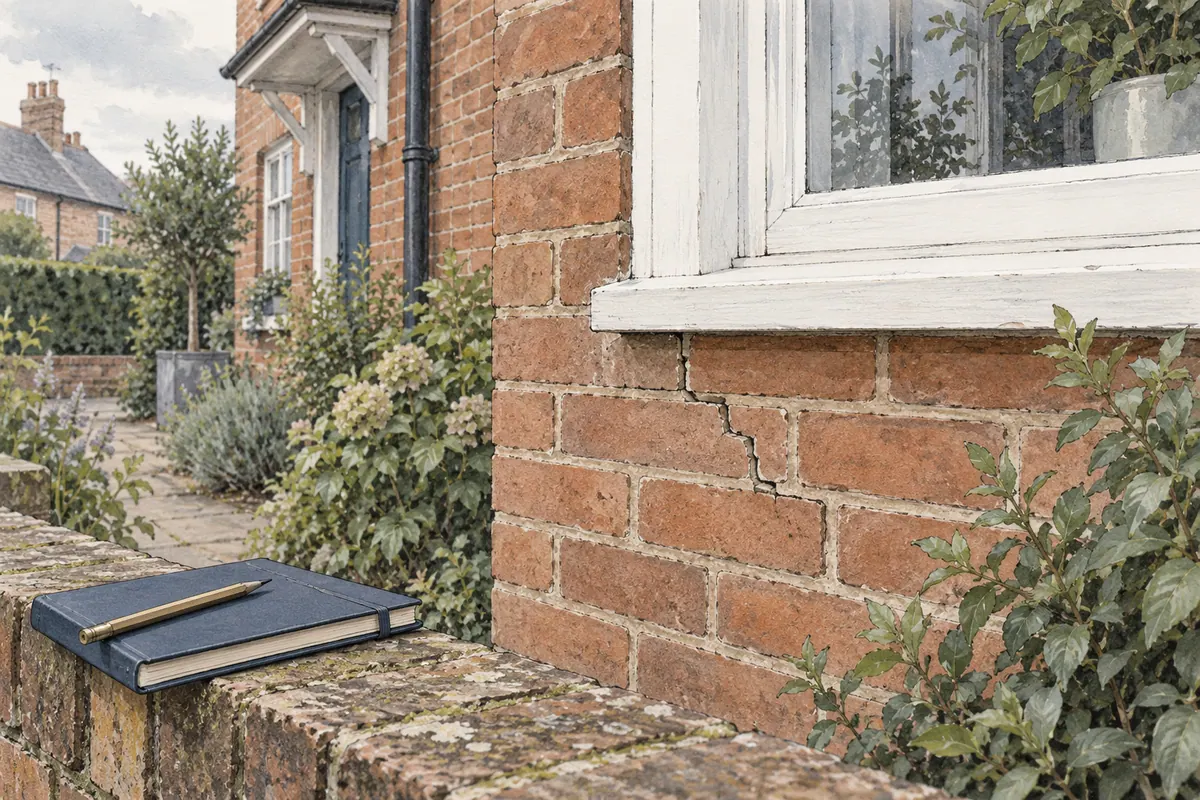
A crack is evidence to investigate, not a diagnosis on its own. Its position, pattern, history and relationship to the rest of the building matter. A photograph or a single width measurement cannot establish whether a house is structurally sound.
Deal with immediate danger first
If there is sudden significant movement, bulging or falling masonry, partial collapse, or another sign of immediate danger, keep people away from the affected area and seek urgent help. Contact emergency services where there is an immediate risk to people. Dangerous structures can also be reported to the local council. GOV.UK: report a dangerous building or structure. Do not enter an unsafe area to photograph it or attempt temporary structural support yourself.
For a concern that is not an emergency, arrange appropriate professional advice rather than assuming that filling the crack is the repair. If a crack has appeared during building work, tell the contractor and structural engineer promptly and ask them to assess the situation before affected work continues.
Describe the change, not just the crack
Start with when you first noticed it. That may be different from when it first appeared, and it is fine to say you do not know.
Record whether it seems to be changing, whether nearby doors or windows have changed operation, and whether similar marks appear elsewhere. RICS identifies new or expanding cracks and associated changes such as sticking openings as reasons to investigate possible movement. It also distinguishes subsidence from other forms of movement; the terms are not interchangeable. RICS: subsidence.
Think back to relevant events without assigning blame. These might include a leak, drainage repairs, an alteration, work on a neighbouring property or a change to trees nearby. A dated sequence is more useful to an engineer than a confident guess about the cause.
Do not use an online crack-width table to decide that a problem can be ignored. A small change in the wrong context can merit attention, while the appearance of an old defect may look alarming without telling you whether movement is continuing.
Make a simple record from a safe position
Take one photograph showing the wall or room, then a closer photograph showing the concern. Keep the original files with their dates. If you can safely place a ruler beside the crack, it may help indicate scale, but it does not turn the photograph into a structural assessment.
Use recognisable locations: “rear bedroom, garden-facing wall, below left window corner” is better than “crack three”. If you take another photograph later, use a similar position and lighting where possible.
Keep a short log with these headings:
- Date first noticed and date recorded.
- Location and what is visible.
- Any observed change since the previous record.
- Associated changes to doors, windows, floors or finishes.
- Recent work, leaks or other relevant events.
- Advice received and the next agreed action.
Record observations honestly. “Door catches at the top; first noticed this week” is useful. “Foundations sinking” is a conclusion that needs evidence.
Gather the house's history
Previous survey reports, structural calculations, drainage information and documents for alterations can help put the concern in context. Look for photographs taken before decorating or building work, including ordinary family photographs that happen to show the wall.
If the house has previously been monitored or repaired, find the report explaining what was concluded and what was done. A line on an invoice saying “crack repair” may describe the work without explaining the underlying cause.
Tell the professional what is missing. An undocumented removed wall, for example, is something to investigate, not proof that the current crack was caused by that alteration.
Ask for the right inspection
A structural condition survey should have an agreed scope. Explain the specific concern, which parts of the property are accessible and what you need to decide: whether repairs are required, whether an alteration can proceed, or what further investigation is sensible.
Ask what the inspection includes, what it cannot reveal and what written output you will receive. Concealed foundations, buried drains and covered structural members cannot necessarily be assessed through a visual visit alone.
CR Design Services describes its structural condition surveys as visual, non-intrusive inspections, with further investigation recommended where needed. That distinction is useful when setting expectations: the first visit may identify the next question rather than produce a complete repair design. CR Design Services: structural condition surveys.
Understand what monitoring is meant to establish
If monitoring is recommended, ask what will be monitored, by whom, at what intervals and what would trigger a different response. There should be a reason for collecting the information and a date or condition for reviewing it.
Monitoring should not mean being left to judge safety from your own photographs. Ask who to contact if the condition changes and which changes need prompt attention. Equally, avoid cosmetic work that removes useful evidence before the professional has recorded what they need.
Check the cause before choosing the repair
Repointing, redecorating or filling may be appropriate parts of making good, but they do not address every cause of cracking. The recommended action should follow the assessment and any necessary investigation.
Where a possible insurance issue is identified, contact your insurer and check its requirements before commissioning non-emergency remedial work. Keep reports, photographs and correspondence together.
If you are concerned about movement in your home, contact CR Design Services with the location, a short history and safely taken photographs. Those details can help define the appropriate inspection; they do not replace it. Ask about a structural condition survey.
Guidance for homeowners in England. Reviewed 8 September 2026.
You might also find useful
Worried about a crack?
One of our structural engineers can inspect it and tell you plainly whether it matters. Fixed fee from £490+VAT.