
Lawful development certificates: when you need one and how to get one
A lawful development certificate is written proof that your project does not need planning permission, or that work already done is safe from enforcement. Here is when it is worth having and what the application involves.
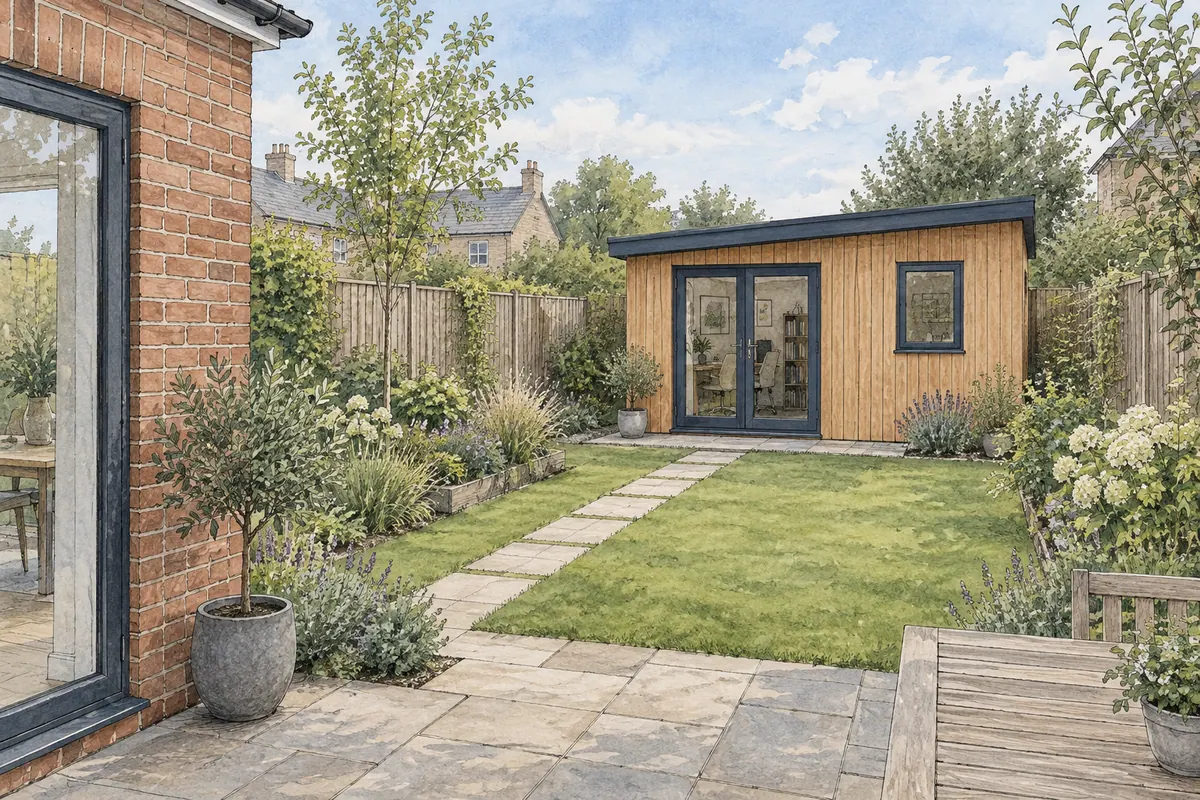
What a lawful development certificate is
A lawful development certificate, often shortened to LDC, is a formal decision by the local planning authority that a particular use, operation or piece of building work is lawful in planning terms. It is not planning permission. It is written confirmation that planning permission is not needed, either because the work is permitted development or because it has been in place long enough to be immune from enforcement.
That distinction changes how the application is judged. A planning application is decided on its merits: design, neighbours, policy and the character of the area. A certificate application is decided on the facts and the law alone: if the development is, or would be, lawful, the council must issue the certificate, and if not it must refuse. Neighbour opinion is not a reason to refuse.
Certificates come under two sections of the Town and Country Planning Act 1990, depending on whether the work has already happened.
Proposed development (section 192) versus existing (section 191)
A section 192 certificate covers proposed use or development: something you intend to do. The typical example is an extension, loft conversion or outbuilding you believe is permitted development, confirmed in writing before you build. The council checks the proposal against the General Permitted Development Order and any local restrictions, and certifies that the work would be lawful if begun on the date of the application. The certificate stands unless the law or your property's circumstances change materially before you start, such as a new Article 4 direction.
A section 191 certificate covers existing use or development: something that has already happened. It has two main uses: to confirm that work already carried out was permitted development at the time, for example an extension a buyer's solicitor is now asking about, or to confirm that a breach of planning control has become immune from enforcement because it has continued, unchallenged, for longer than the time limit. Either way it records that the council can no longer take enforcement action against what is described.
For a proposed certificate the question is whether the drawings comply with the rules; for an existing one it is what actually happened, and when, and the burden of proof sits with you.
Why it matters when you sell or remortgage
When a house is sold, the buyer's solicitor asks whether any extensions or alterations had planning permission and building regulations approval. A reply of "it was permitted development" is an opinion; a lawful development certificate is proof. Without one, the buyer's side may ask for an indemnity insurance policy, a price reduction or a retrospective application, each of which slows the sale.
Lenders take the same view on a remortgage: a valuer who notices an undocumented extension may raise it, and the lender may want it regularised before releasing funds.
Permitted development limits are technical, and whether an extension sits inside them can turn on a few centimetres of eaves height or how the "original house" is measured. A certificate settles the question while the facts are fresh, rather than years later when a sale is under pressure.
What the application needs: drawings and evidence
For a proposed certificate, the application looks much like a planning application, because the council has to check the same dimensions.
- the application form, with a precise description of the proposed work;
- a site location plan on an Ordnance Survey base with the property edged in red;
- scaled existing and proposed floor plans, elevations and, where roof height or volume matters, sections;
- a block plan showing distances to boundaries, which decide most of the permitted development limits;
- a short statement explaining which class of permitted development the work relies on and why each limit is met.
Accuracy is the whole point. A drawing that is generous on eaves height, or measures depth from the wrong wall, will either be refused or produce a certificate that does not match what is built, so base the drawings on a proper measured survey rather than an estate agent's floor plan.
For an existing certificate, drawings show what is there, but the case is won or lost on evidence of when it was done and how it has been used since, for example:
- dated photographs, including aerial imagery where it shows the building at a known date;
- invoices, receipts and contracts from the builder or suppliers;
- council tax, utility and insurance records showing continuous use;
- statutory declarations from you, previous owners, neighbours or tradespeople who saw the work;
- for a use, evidence that it has continued without interruption for the whole period.
The standard of proof is the balance of probabilities, and the evidence must be precise enough for the council to define exactly what is being certified. Vague recollections and undated photographs rarely get there.
A certificate obtained on false or misleading information can be revoked, and deliberate concealment of a breach can extend the period in which the council may act.
How long it takes: the eight-week decision period
The council has eight weeks from validation to decide either type of certificate, the same as a householder planning application. With no neighbours to consult and no planning judgement to make, proposed certificates for straightforward extensions are often decided well inside that period. Existing-use applications with a large evidence bundle can take the full eight weeks, or longer by agreement.
If the council refuses, or fails to decide in time, you can appeal to the Planning Inspectorate on the same question of law and fact. The council's fee for a proposed certificate is lower than for an equivalent planning application; an existing-use certificate is charged at the planning rate.
The 4-year and 10-year rules, and the 2024 change
An existing certificate depends on the enforcement time limits. For many years England had two: a 4-year rule for building work and for the change of use of a building to a single dwelling, and a 10-year rule for other changes of use and breaches of conditions. Once the period had passed, the development was immune and a certificate could be issued.
The Levelling-up and Regeneration Act 2023 changed this. From 25 April 2024 the limit in England is 10 years for all breaches of planning control. The 4-year rule still applies where the building work was substantially completed, or the change of use to a single dwelling took place, before that date, so an extension finished in 2019 became immune after four years, but one finished in mid-2024 has to stand for ten.
The "wait it out" approach to unauthorised work is therefore far less useful than it was. For anything built since the change, the sensible routes are a proposed certificate before starting, or a retrospective planning application if the work is not permitted development.
Listed buildings are different again: there is no time limit for enforcement against unauthorised works to a listed building, so a certificate cannot make them lawful.
When full planning permission is the better route
A certificate is only worth applying for when the work clearly qualifies. In several common situations a planning application is the better choice.
- The design is close to a limit. If the extension is within a few centimetres of a limit, a small design change later would take it outside permitted development and leave the certificate describing something you did not build. Planning permission approves the drawings as submitted.
- Part of the scheme is not permitted development. If the rear extension is permitted development but the front porch or raised decking is not, one planning application for the lot is simpler than a certificate plus a separate application.
- Rights have been removed. In a flat, or where an Article 4 direction or a planning condition has removed permitted development rights, there is nothing to certify. Check the position on our planning permission guide first.
- You want something better than the rules allow. If the design you actually want is a little larger, or uses materials that do not match the house, a planning application lets the council judge it on merit rather than against a checklist.
- The larger home extension route applies. Single-storey rear extensions beyond the standard depth use a separate prior approval procedure, not a certificate.
Our pages on extensions, outbuildings and change of use set out where each type of project usually sits.
Frequently asked
Is a lawful development certificate the same as planning permission?
No. Planning permission grants consent for something that needs it. A lawful development certificate confirms that consent is not needed, either because the work is permitted development or because it has become immune from enforcement. It is proof, not permission, and it does not remove the need for building regulations approval.
Do neighbours get a say in a certificate application?
No. The council decides on the facts and the law, not on planning merit, so objections about overlooking, appearance or disruption carry no weight, even where a council chooses to notify neighbours.
Can a proposed certificate be refused?
Yes, if the council concludes the work would not be permitted development. That is not a refusal of planning permission; it means you need either to amend the design to fit the rules or to apply for planning permission. You can also appeal to the Planning Inspectorate.
Do I still need building regulations approval if I have a certificate?
Yes. A certificate deals only with planning. Almost every extension, loft conversion and structural alteration needs building regulations approval whether or not it needed planning permission, and the completion certificate from building control is a separate document a buyer's solicitor will ask for.
My extension was built years ago without permission. What should I do?
Gather evidence of when it was built and apply for an existing-use certificate under section 191. If the work was substantially complete before the April 2024 change and four years have passed, the old rule still applies; otherwise the period is ten years. If it does not yet qualify, a retrospective planning application may be quicker.
How CR Design help
Confirming the right route is one of the first things we do on every project: full planning permission, or a lawful development certificate. CR Design Services are Durham-based architects and structural engineers under one roof. We carry out site visits, planning and concept design across the North East, and prepare building regulations drawings and structural design nationwide. For a certificate application we carry out the measured survey, prepare the drawings and the licensed OS location plan, write the permitted development statement, and act as your agent with the council until the certificate is issued. The instant quote tool gives a fixed figure for each stage, and our planning permission drawings service explains what is included.
You might also find useful
Thinking about a project?
Tell us what you have in mind and we'll talk you through the right route, the likely stages and what to expect, with architecture and structural engineering under one roof.