
Trees, clay soils and subsidence: why the season matters
Clay shrinks as it dries and swells as it wets, and a thirsty tree dries the clay deeper and further than the weather alone ever would. It is one of the most common causes of subsidence in the UK — and one of the most manageable.
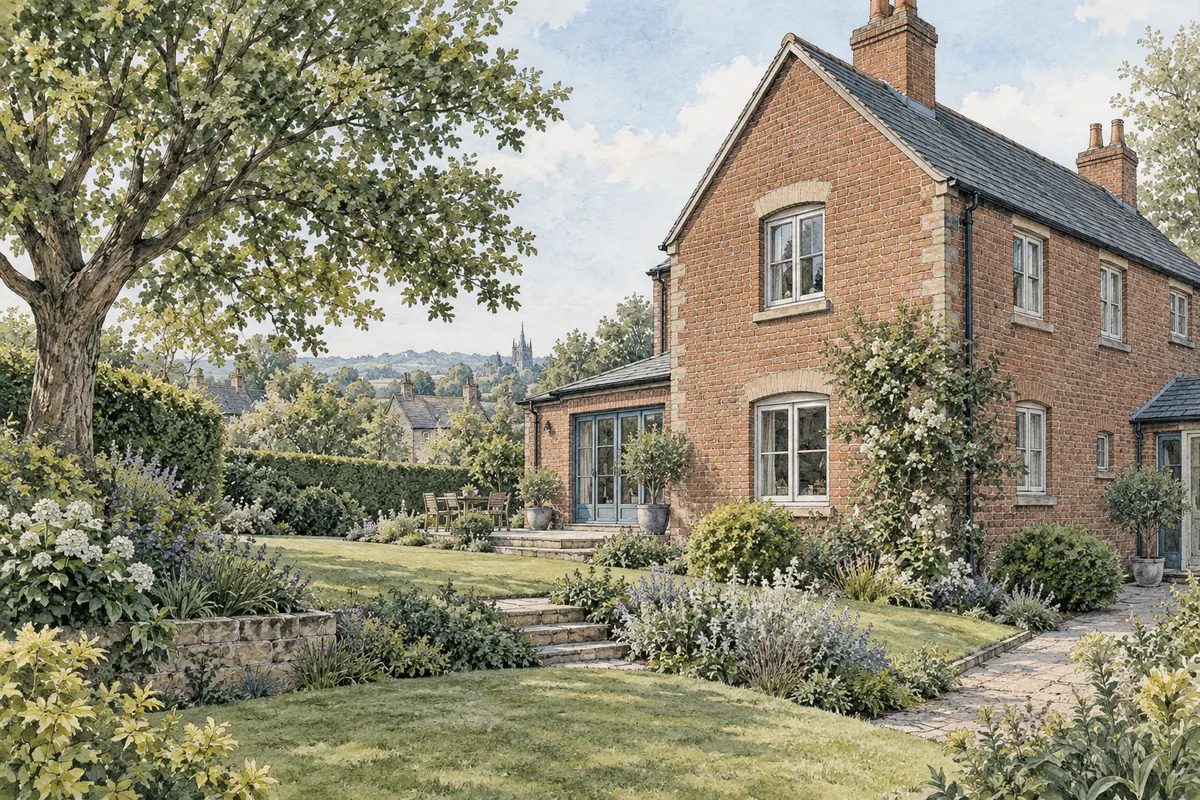
Trees and large shrubs draw a great deal of water from the ground, particularly in summer. On shrinkable clay, that drying makes the ground settle — and foundations above it settle too, often recovering partly through the wet winter months. The classic signs are cracks that open in late summer and close in winter, and doors or windows that stick at certain times of year. Shallow foundations, such as those under many extensions and bay windows, are affected first.
Which trees are the risk?
The risk depends on the species, its size and distance from the building, and how shrinkable the clay is. The high water demand species include oak, willow, poplar, elm, eucalyptus and Leyland cypress. As a rough guide, these can affect the ground at a distance greater than their own height — a 15m oak can matter 20m away.
Why you should not simply fell the tree
It feels like the obvious fix, and it is often the most damaging one. A mature tree that has been drying the clay for decades is part of the ground's equilibrium: remove it and the clay slowly rehydrates and swells back over several years, lifting the foundations. This is heave, and it can cause worse damage than the original subsidence. A mature tree close to a building should never be felled or heavily cut back without advice — phased reduction is often the safer route.
The sensible options, situation by situation
| Situation | Typical approach |
|---|---|
| Young tree close to the house | Remove early, before it dries the ground. |
| Mature tree, seasonal movement confirmed | Regular crown reduction, a root barrier, or phased removal after a heave assessment. |
| Protected tree (TPO or conservation area) | Council consent, or six weeks' notice, needed before any work. |
| Tree owned by a neighbour or the council | Approach the owner. Your insurer may deal with this within a claim. |
| New extension near trees | Deeper or piled foundations with heave protection, designed to NHBC Chapter 4.2. |
Confirming that movement really is seasonal is what 12-month crack monitoring is for, and a trial pit with root identification proves which tree is responsible rather than convicting the nearest one.
Typical costs
| Item | Typical cost (excl. VAT) |
|---|---|
| Arboricultural survey and report | £300 – £800 |
| Crown reduction, per tree | £300 – £1,500 |
| Felling a large tree, including removal | £800 – £3,000+ |
Next steps
Do not fell or heavily prune trees near the building until you have advice, and check with the council whether they are protected. If subsidence is suspected, contact your buildings insurer before arranging any tree work, and keep dated records of any pruning — the history of the tree is part of the engineering evidence.
Guidance for homeowners in England. Costs are indicative at 18 October 2026 and depend on the property and ground conditions. Reviewed 18 October 2026.
You might also find useful
Cracks that come and go with the seasons?
That pattern usually has a cause we can name. Our structural engineers will inspect, identify the likely culprit and set out a proportionate plan. Fixed-fee inspections from £490+VAT.